



For decades, professional audiovisual systems were built around dedicated cables, fixed signal paths, and specialized switching hardware. A projector in one room, a video wall in another, and a conference display somewhere else often required separate point-to-point connections and complex infrastructure. Today, that model is changing quickly. AV over IP is moving audio and video distribution onto standard network infrastructure, giving organizations a more flexible, scalable, and intelligent way to move media around buildings, campuses, and even remote locations.
TLDR: AV over IP uses network technology to transmit audio, video, and control signals instead of relying on traditional dedicated AV cabling. It makes modern AV systems easier to scale, manage, and integrate with IT infrastructure. While it requires careful planning around bandwidth, latency, security, and standards, it offers major advantages for education, corporate, entertainment, healthcare, and control room environments.
What Is AV over IP?
AV over IP, short for Audio Visual over Internet Protocol, is a method of sending video, audio, USB, control, and sometimes power-related data across an Ethernet network. Instead of connecting a source directly to a display with an HDMI, SDI, or VGA cable, the signal is converted into data packets and transported through network switches.
In a typical setup, a source device such as a laptop, camera, media player, or set-top box connects to an encoder. The encoder converts the AV signal into network data. That data travels across the network to a decoder, which converts it back into a video or audio signal for a display, speaker system, recording device, or processor.
This approach may sound similar to streaming video over the internet, but professional AV over IP is usually designed for much higher performance. It often supports low latency, synchronized playback, high resolutions, secure management, and reliable operation in mission-critical environments.
How Traditional AV Distribution Works
To understand why AV over IP matters, it helps to look at the traditional model. Conventional AV systems are usually built around fixed signal routing. A source is connected to a matrix switcher, and the matrix sends the signal to one or more outputs. This model works well for smaller or predictable systems, but it has limitations.
- Limited scalability: Expanding a matrix switcher beyond its physical input and output capacity can be expensive.
- Dedicated cabling: Each signal path may require its own cable, creating installation complexity.
- Distance restrictions: HDMI and other formats have practical distance limits without extenders.
- Rigid design: Reconfiguring rooms or adding new endpoints may require significant rewiring.
- Hardware dependency: A failed central switcher can affect the entire system.
In contrast, AV over IP treats the network as the distribution fabric. Once the network is designed properly, adding a new source or display can be as simple as connecting another encoder or decoder to the system.
How AV over IP Works
At its core, AV over IP relies on the same basic principles as other networked systems. Information is converted into packets, addressed, transported, and reconstructed at the destination. The difference is that AV content can be extremely demanding. High-resolution video requires substantial bandwidth, and live applications require low latency.
Most AV over IP systems include several key components:
- Encoders: Devices that take AV signals from sources and compress or packetize them for network transport.
- Decoders: Devices that receive packetized AV data and convert it back into usable output signals.
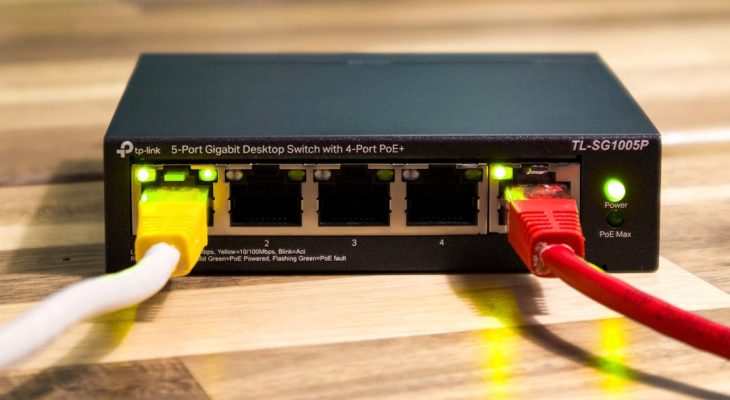
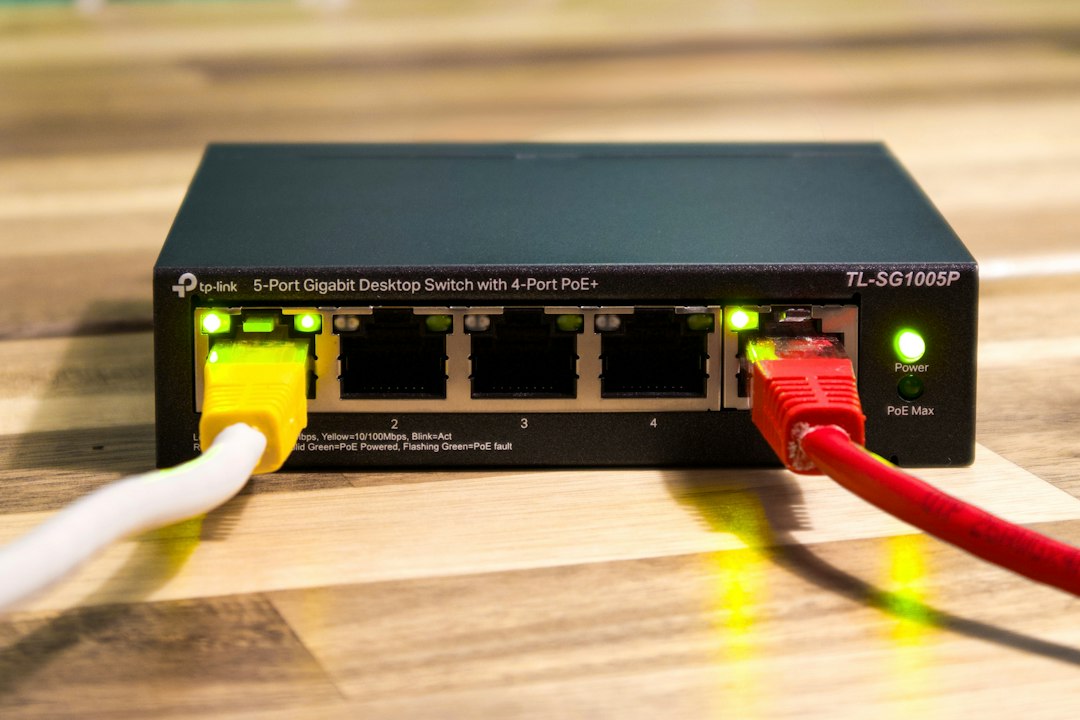
- Network switches: The backbone of the system, responsible for moving packets efficiently between endpoints.
- Control software: Interfaces that allow users or administrators to route sources, create presets, monitor devices, and manage settings.
- Management protocols: Technologies that handle discovery, synchronization, security, and quality of service.
Some solutions use heavy compression to reduce bandwidth needs, while others use visually lossless or uncompressed transport for maximum quality. The right choice depends on the application. A digital signage network may tolerate more compression and latency, while a medical imaging suite, broadcast studio, or live performance venue may require extremely high fidelity and near-instant response.
Why AV over IP Is Transforming Modern AV Systems
The biggest advantage of AV over IP is flexibility. Traditional AV systems are often designed around fixed endpoints, but modern spaces change constantly. Meeting rooms become hybrid collaboration rooms. Classrooms need lecture capture and remote learning capabilities. Retail environments update displays dynamically. Operations centers add new data feeds overnight.
With AV over IP, the network becomes a programmable AV platform. Any authorized source can be routed to any authorized destination, often through a browser-based interface or integrated control system. This makes it much easier to create multipurpose spaces and adapt to changing requirements.
Another major benefit is scalability. Instead of buying a larger matrix switcher every time a system grows, organizations can expand by adding network ports, switches, encoders, and decoders. This modular model can reduce long-term costs and make upgrades more manageable.
AV over IP also encourages closer alignment between AV and IT teams. Because the system runs on network infrastructure, it can be monitored, secured, updated, and managed using familiar IT practices. For large organizations, this can bring AV out of the equipment closet and into the broader technology ecosystem.
Key Benefits of AV over IP
AV over IP offers a long list of practical advantages, especially for organizations that need adaptable and future-ready media systems.
- Easy expansion: Add new rooms, displays, and sources without redesigning the entire system.
- Centralized management: Monitor device health, update firmware, and change routes from a single interface.
- Long-distance transport: Send AV signals across buildings or campuses using fiber or structured cabling.
- Improved redundancy: Network design can include backup paths and failover strategies.
- Better resource sharing: Cameras, computers, media players, and displays can be shared across multiple spaces.
- Integration with control systems: AV routing can be combined with lighting, shades, microphones, and room scheduling.
- Future readiness: Network-based systems can often adapt more easily to new formats and workflows.
These benefits are especially valuable in environments where AV systems are no longer occasional presentation tools, but central parts of daily communication and operations.

Where AV over IP Is Used
AV over IP is now used across many industries. In corporate environments, it supports divisible meeting rooms, boardrooms, training centers, and hybrid workspaces. A presenter’s laptop can be shown on multiple displays, a remote participant feed can be routed to a video wall, and a room can be reconfigured for different events with a single preset.
In education, AV over IP enables lecture capture, overflow classrooms, distance learning, and campus-wide media distribution. A university can route a guest lecture from one auditorium to classrooms in other buildings or send digital signage and emergency messaging across the network.
In healthcare, it can support operating room video routing, simulation labs, training rooms, and diagnostic collaboration. Because medical environments often require high image quality and reliability, careful system design is essential.
In control rooms, AV over IP is particularly powerful. Security operations, utilities, transportation centers, and emergency response teams often need to display many real-time sources on large video walls. Network-based distribution makes it easier to route camera feeds, dashboards, maps, and data visualizations exactly where they are needed.
Entertainment venues, houses of worship, hotels, museums, and retail spaces also use AV over IP to distribute content efficiently and create more immersive experiences.
Compression, Latency, and Quality
One of the most important considerations in AV over IP is the balance between image quality, bandwidth, and latency. These three factors are closely connected.
Compression reduces the amount of data needed to transmit audio and video. This can make systems more affordable because they may run on standard 1 gigabit networks. However, compression can introduce latency and, depending on the codec, visible artifacts. For many applications, visually lossless compression is more than adequate. For others, such as high-end production or specialized imaging, uncompressed or ultra-low-latency solutions may be preferred.
Latency is the delay between an action at the source and the result at the display. For digital signage, a few seconds may not matter. For live camera feeds, interactive presentations, gaming, or performance spaces, latency must be extremely low. If a presenter moves a mouse and the cursor lags on screen, the experience feels unnatural.
Quality depends not only on resolution but also on color depth, frame rate, chroma sampling, compression method, and display calibration. A 4K signal is not automatically high quality if it is overly compressed or poorly processed.
The Network Matters
Because AV over IP depends on the network, the quality of the network design is critical. A common mistake is assuming that any existing network can handle professional AV traffic without planning. Video can consume far more bandwidth than typical office applications, and multicast traffic must be managed properly.
Important network features may include:
- Quality of Service: Prioritizes AV packets to maintain smooth performance.
- IGMP snooping: Helps manage multicast traffic efficiently.
- VLANs: Separates AV traffic from other network traffic for performance and security.
- Power over Ethernet: Powers some devices through the network cable.
- Fiber uplinks: Provides high bandwidth between network switches and buildings.
- Redundant paths: Improves reliability for critical systems.
Successful AV over IP projects usually involve collaboration between AV integrators and IT professionals from the beginning. The AV team understands signal flow, user experience, and room requirements. The IT team understands switching, addressing, cybersecurity, monitoring, and network policy. When both groups work together, the result is far stronger.

Security and Management Considerations
As AV systems become networked, they also become part of the organization’s cybersecurity landscape. This is not a reason to avoid AV over IP, but it is a reason to design it responsibly.
Devices should use strong authentication, encrypted management where available, regular firmware updates, and proper network segmentation. Default passwords should be changed immediately. Access to routing controls should be limited to authorized users. In sensitive environments, AV traffic may need to be isolated from general business networks.
Management is another important factor. A large AV over IP deployment may include hundreds or thousands of endpoints. Administrators need tools to monitor device status, detect failures, push updates, view bandwidth usage, and troubleshoot problems quickly. The best systems make AV feel less like a collection of individual boxes and more like a managed technology platform.
Standards and Interoperability
The AV over IP market includes a wide range of proprietary and standards-based solutions. Some ecosystems are designed to work primarily within a single manufacturer’s product line. Others support broader interoperability through open standards or widely adopted protocols.
Standards such as NDI, SMPTE ST 2110, Dante AV, and other IP-based media transport technologies are shaping how devices communicate. Each has strengths and typical use cases. For example, broadcast environments often prioritize precise timing and uncompressed quality, while corporate and educational systems may focus on ease of deployment and cost-effective scaling.
When selecting a solution, it is important to consider not just today’s needs but also future compatibility. A system that locks an organization into a narrow ecosystem may be simple at first but limiting later. On the other hand, a tightly integrated ecosystem can offer reliability and easier support. The right choice depends on priorities, budget, and technical requirements.
Challenges to Plan For
AV over IP is powerful, but it is not magic. Like any technology, it comes with challenges. Bandwidth planning can be complex, especially when many high-resolution sources are active at once. Network switches must be suitable for the traffic load. Latency must be matched to the use case. Security policies must be enforced. Staff may need training to manage the system effectively.
There can also be organizational challenges. AV and IT departments may have different workflows, terminology, and priorities. A successful deployment often requires clear communication about ownership, support responsibilities, and change management. If the AV system depends on the network, then network maintenance windows, firmware updates, and configuration changes can affect user experience.
The Future of AV Is Networked
The shift to AV over IP reflects a larger trend: media, communication, and building technology are becoming software-defined and network-centric. Displays, cameras, microphones, speakers, control panels, lighting systems, and collaboration platforms are increasingly connected. AV is no longer isolated from the rest of the technology environment.
As bandwidth becomes cheaper, codecs improve, and standards mature, AV over IP will continue to expand. Artificial intelligence may help automate camera switching, optimize signal routing, detect faults, and personalize meeting experiences. Cloud integration may allow remote production, centralized management, and cross-site collaboration at an even larger scale.
For organizations planning new AV systems, the key question is no longer whether network-based distribution matters. It is how to design it well. With the right infrastructure, security, planning, and expertise, AV over IP can turn static AV systems into flexible, intelligent, and scalable communication platforms.
Modern AV is expected to do more than show a presentation on a screen. It must connect people, places, data, and experiences in real time. AV over IP is one of the technologies making that possible, and its impact on the design of audiovisual systems is only beginning to unfold.