


As organizations increasingly rely on GraphQL to unify data across distributed systems, the need for robust API management has become mission-critical. While StepZen has gained recognition for simplifying GraphQL data federation and serverless deployment, it is not the only option teams evaluate. Engineering leaders often compare multiple platforms based on scalability, governance, pricing, ecosystem maturity, and long-term flexibility.
TLDR: StepZen is a capable GraphQL data federation solution, but many teams compare it with alternatives that offer broader ecosystem maturity, deeper observability, or different hosting models. Apollo GraphOS, Hasura, AWS AppSync, Kong Gateway, and Tyk are among the most frequently evaluated tools. Each serves different priorities—ranging from managed federation and real-time APIs to enterprise-grade API gateway control. Choosing the right platform depends heavily on architectural complexity, compliance needs, and internal expertise.
Below is a closer look at five serious alternatives teams assess when evaluating GraphQL API management strategies.
1. Apollo GraphOS
Apollo is often the first name that appears in conversations about GraphQL infrastructure. As one of the earliest contributors to the GraphQL ecosystem, Apollo offers a mature suite for federation, schema registry, observability, and governance through GraphOS.
Image not found in postmetaWhy teams compare it to StepZen:
- Advanced schema registry and governance tooling
- First-class support for Apollo Federation
- Comprehensive usage analytics and performance insights
- Large community and strong documentation
Apollo GraphOS is particularly attractive to organizations adopting a supergraph architecture, where multiple subgraphs are composed into a unified data layer. In comparison to StepZen’s serverless data integration approach, Apollo emphasizes structured federation and enterprise observability.
Where it stands out: Mature federation support, contract variants for schema evolution, and detailed operational metrics.
Considerations: Pricing can scale quickly with API volume, and implementation requires architectural discipline.
2. Hasura
Hasura takes a different approach by automatically generating real-time GraphQL APIs directly on top of databases. It is widely adopted for projects that prioritize speed of development and database-driven API architectures.
Why teams compare it to StepZen:
- Instant GraphQL APIs from PostgreSQL and other databases
- Built-in role-based access control
- Strong support for real-time subscriptions
- Flexible deployment: self-hosted or cloud
Unlike StepZen, which emphasizes connecting multiple APIs and data sources into a unified GraphQL endpoint, Hasura is deeply optimized around database-first development. Teams building internal dashboards, SaaS applications, or data-heavy platforms often favor Hasura for its rapid implementation capabilities.
Where it stands out: Speed of delivery, real-time capabilities, clean permission modeling.
Considerations: Complex cross-service federation may require additional tooling.
3. AWS AppSync
For teams already committed to AWS infrastructure, AppSync is a natural alternative to StepZen. It is a fully managed GraphQL service that integrates tightly with other AWS services such as DynamoDB, Lambda, and Cognito.
Why teams compare it to StepZen:
- Deep AWS ecosystem integration
- Built-in support for real-time subscriptions
- Scalable, fully managed environment
- Fine-grained access control via IAM
AppSync is particularly well-suited for organizations adopting serverless AWS architectures. It handles much of the scaling complexity automatically and integrates seamlessly with identity and networking services.
However, AppSync can lead to ecosystem lock-in, and advanced configurations may introduce operational complexity. Compared to StepZen’s developer-friendly abstraction layer, AppSync often assumes familiarity with AWS infrastructure patterns.
Where it stands out: Enterprise-grade scalability within AWS environments.
Considerations: Limited portability outside AWS and more configuration overhead.
4. Kong Gateway (with GraphQL support)
Kong is widely known as an API gateway platform rather than a GraphQL-native solution. Yet many enterprises compare it to StepZen when seeking comprehensive API management across REST, GraphQL, and event-driven systems.
Why teams compare it to StepZen:
- Advanced API gateway controls and plugins
- Traffic management, rate limiting, and authentication
- Multi-protocol support (REST, gRPC, GraphQL)
- On-prem and hybrid deployment flexibility
Kong’s strength lies in operational governance rather than GraphQL federation alone. Teams that already use Kong for REST APIs frequently extend it to manage GraphQL endpoints under the same policy framework.
Where it stands out: Enterprise traffic control and security management.
Considerations: Less specialized in schema federation compared to Apollo or StepZen.
5. Tyk
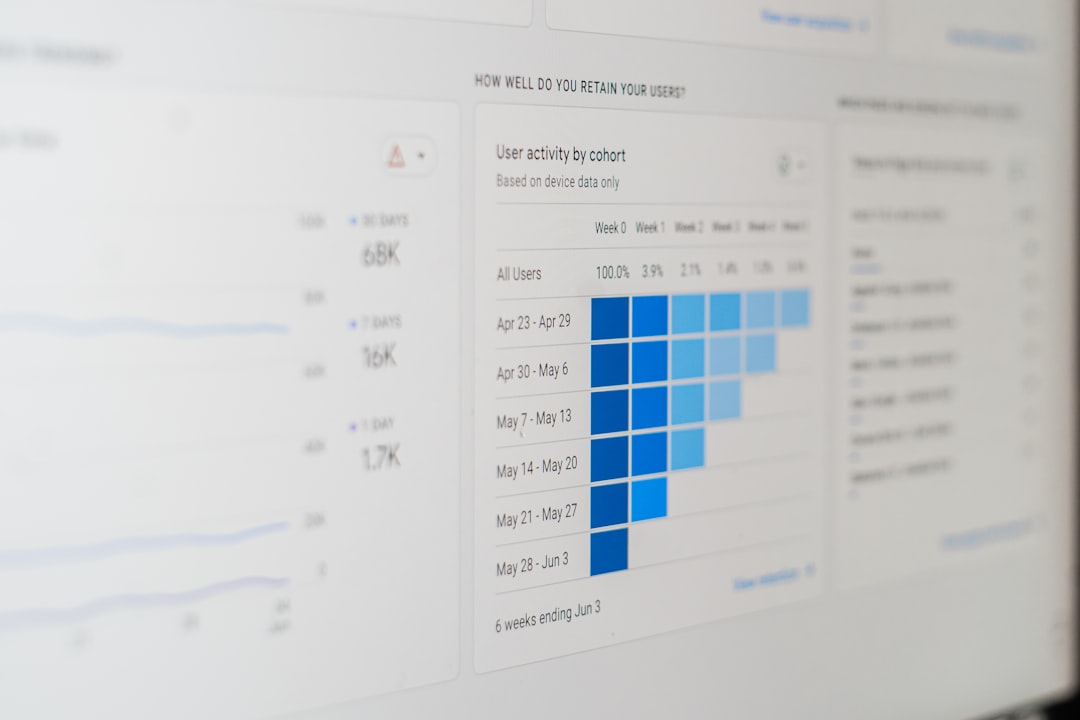
Tyk is another enterprise-grade API gateway platform with growing GraphQL support. Like Kong, it focuses on API governance, analytics, and security across large environments.
Why teams compare it to StepZen:
- GraphQL schema stitching and introspection controls
- Strong security and policy enforcement
- Hybrid and on-premise deployment options
- Transparent pricing models
Tyk appeals to organizations in regulated industries where fine-grained policy enforcement and self-hosting are priorities. Compared to StepZen’s managed developer-centric workflow, Tyk delivers infrastructure-level authority and observability.
Where it stands out: Governance, compliance support, and deployment flexibility.
Considerations: May require more internal DevOps investment to configure effectively.
Comparison Chart
| Tool | Best For | Hosting Model | Federation Support | Enterprise Governance |
|---|---|---|---|---|
| Apollo GraphOS | Large-scale federated architectures | Cloud (managed) | Advanced (Apollo Federation) | High |
| Hasura | Database-driven apps | Cloud or self-hosted | Moderate | Medium |
| AWS AppSync | AWS serverless ecosystems | Fully managed (AWS) | Limited native federation | High (AWS IAM integration) |
| Kong Gateway | Full API lifecycle management | Cloud, hybrid, on-prem | Basic to moderate | Very High |
| Tyk | Regulated enterprises | Cloud, hybrid, on-prem | Schema stitching | Very High |
Key Decision Factors Teams Consider
When evaluating StepZen against these alternatives, technical leaders typically focus on several criteria:
- Architecture strategy: Federation, schema stitching, or gateway-based aggregation?
- Vendor lock-in: Is portability across environments important?
- Operational visibility: How detailed must analytics and tracing be?
- Deployment model: Fully managed, hybrid, or self-hosted?
- Security and compliance: Role-based access, audit trails, and policy enforcement.
StepZen often appeals to developer teams seeking rapid GraphQL unification without extensive infrastructure management. However, at enterprise scale, governance requirements frequently push decision-makers toward platforms like Apollo, Kong, or Tyk.
Final Thoughts
There is no universal replacement for StepZen—only platforms optimized for different priorities. Apollo GraphOS excels in structured federation and schema governance. Hasura dramatically accelerates database-backed application development. AWS AppSync integrates natively into existing AWS stacks. Meanwhile, Kong and Tyk emphasize enterprise API management and operational control.
The right choice depends less on feature checklists and more on long-term architectural goals. Teams building a scalable supergraph for microservices will prioritize federation maturity. Organizations operating in regulated sectors may focus on policy enforcement and self-hosting. Startups moving quickly may prefer rapid deployment and minimal operational overhead.
In GraphQL API management, the tooling decision shapes developer experience, operational complexity, and system resilience for years to come. Careful evaluation—grounded in real-world performance, governance needs, and organizational strategy—remains the most responsible path forward.