



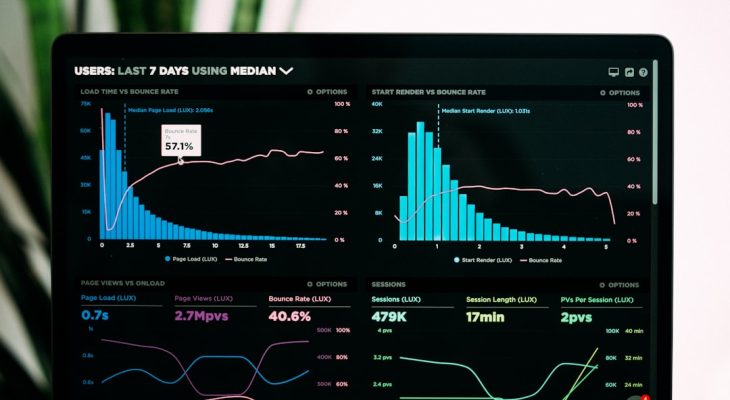
Global supply chains have become increasingly complex, driven by e-commerce acceleration, global sourcing, rising customer expectations, and geopolitical pressures. Organizations can no longer rely on disconnected systems and manual updates to manage inventory, procurement, transportation, and fulfillment. What they need is end-to-end visibility—the ability to monitor goods, data, and operations in real time from supplier to customer. Modern supply chain management (SCM) platforms offer exactly that, combining analytics, automation, and integration capabilities into unified ecosystems.
TLDR: End-to-end supply chain visibility is essential for resilience, efficiency, and cost control in today’s business environment. Leading SCM platforms integrate procurement, inventory, transportation, analytics, and collaboration tools into unified systems. This article reviews seven trusted platforms that provide strong visibility capabilities and compares their core strengths. Choosing the right solution depends on company size, complexity, integration requirements, and digital maturity.
Below are seven supply chain management platforms recognized for their robust visibility and operational control capabilities.
1. SAP Integrated Business Planning (IBP)
SAP IBP is a comprehensive, cloud-based solution designed for companies that require deep planning intelligence and global operational visibility. It integrates supply chain planning with financial forecasting and real-time analytics.
Key strengths:
- Real-time visibility across global networks
- Advanced demand forecasting and scenario planning
- Strong integration with SAP ERP systems
- In-memory analytics powered by SAP HANA
SAP is particularly well suited for large enterprises operating across multiple regions. Its ability to simulate supply disruptions and optimize inventory positioning makes it ideal for manufacturing, retail, and consumer goods sectors.

2. Oracle Supply Chain Management Cloud
Oracle SCM Cloud provides end-to-end supply chain orchestration across procurement, manufacturing, logistics, and product lifecycle management. Oracle emphasizes predictive analytics, automation, and artificial intelligence.
Notable capabilities:
- Integrated procurement and supplier management
- Transportation and warehouse management
- AI-driven demand and supply planning
- Digital supply chain control tower features
Its unified cloud architecture reduces reliance on third-party integrations and gives companies improved data consistency. Oracle is often favored by enterprises seeking scalable, AI-powered optimization tools.
3. Kinaxis RapidResponse
Kinaxis RapidResponse is well known for its concurrent planning approach, which synchronizes supply, demand, and inventory decisions in real time. Its in-memory architecture enables instant scenario testing and collaboration across departments.
Core advantages:
- Real-time scenario simulation
- Collaborative sales and operations planning
- Risk management and disruption response tools
- Highly configurable dashboards
Organizations dealing with volatile markets and rapid demand shifts—such as electronics or pharmaceuticals—benefit from Kinaxis’ agility-driven framework.
4. Blue Yonder (formerly JDA Software)
Blue Yonder combines AI, machine learning, and predictive analytics to improve end-to-end visibility. Its platform emphasizes retail, logistics, and manufacturing ecosystems, providing granular insight into inventory movements and demand trends.
Highlighted features:
- AI-based demand forecasting
- Autonomous supply planning
- End-to-end fulfillment visibility
- Warehouse and labor optimization
Blue Yonder’s strength lies in its ability to merge operational data from multiple nodes into actionable intelligence. This helps reduce stockouts, improve replenishment strategies, and optimize customer satisfaction outcomes.

5. Infor Supply Chain Management
Infor SCM offers industry-specific functionality with strong cloud-native capabilities built on its CloudSuite platform. It provides integrated logistics, inventory management, and supplier collaboration tools.
Primary benefits:
- Cloud-based multi-tenant architecture
- Integrated demand planning and procurement
- Embedded analytics and reporting
- Scalable for mid-sized to large enterprises
Infor’s industry focus—especially in manufacturing, food and beverage, and healthcare—allows it to address specialized compliance and operational needs with greater precision.
6. Manhattan Associates Supply Chain Solutions
Manhattan Associates is especially strong in logistics execution, warehouse management, and transportation visibility. Its cloud-native platform unifies planning and execution across distribution networks.
Key capabilities:
- Advanced warehouse management systems (WMS)
- Transportation management and optimization
- Omnichannel fulfillment visibility
- Labor and yard management integration
Companies with complex distribution networks benefit from Manhattan’s ability to integrate e-commerce fulfillment, last-mile delivery, and physical distribution center operations into one ecosystem.
7. project44
Unlike traditional enterprise suites, project44 focuses heavily on real-time transportation visibility. It connects shippers, carriers, and third-party logistics providers into a single data-sharing platform.
Distinct advantages:
- Live shipment tracking across multiple transport modes
- Predictive estimated time of arrival calculations
- Extensive carrier network integration
- API-first architecture for seamless connectivity
project44 excels in providing granular shipment-level transparency, making it particularly valuable for companies optimizing last-mile and cross-border logistics.

Platform Comparison Chart
| Platform | Best For | Key Strength | Deployment Model | Ideal Company Size |
|---|---|---|---|---|
| SAP IBP | Global enterprises | Advanced scenario planning | Cloud | Large enterprises |
| Oracle SCM Cloud | Integrated enterprise operations | AI-driven planning | Cloud | Mid to large |
| Kinaxis RapidResponse | Volatile demand industries | Concurrent planning | Cloud | Mid to large |
| Blue Yonder | Retail and logistics | AI demand forecasting | Cloud | Mid to large |
| Infor SCM | Industry-specific operations | CloudSuite flexibility | Cloud | Mid to large |
| Manhattan Associates | Distribution networks | Warehouse optimization | Cloud | Mid to large |
| project44 | Transportation visibility | Real-time shipment tracking | Cloud / API | All sizes |
Key Considerations When Selecting a Platform
Choosing the right SCM platform requires a thorough evaluation of operational needs, integration complexity, and long-term scalability. Consider the following:
- Integration requirements: Can the platform integrate with existing ERP, CRM, and warehouse systems?
- Data visibility depth: Does it provide shipment-level tracking or only aggregate reporting?
- Scalability: Will it adapt to growth, acquisitions, or geographic expansion?
- Industry alignment: Does the vendor understand sector-specific regulations and workflows?
- User experience: Are dashboards intuitive and accessible across departments?
Organizations should also evaluate vendor stability, global support capabilities, and implementation timelines. A phased rollout strategy often reduces disruption and allows internal teams to adjust to new workflows more effectively.
The Strategic Value of End-to-End Visibility
End-to-end visibility is not only about tracking shipments—it enables proactive risk management, optimized working capital, and improved collaboration. When supply chain leaders have access to accurate, real-time data, they can:
- Reduce excess inventory and holding costs
- Respond quickly to supplier disruptions
- Improve on-time delivery performance
- Enhance customer satisfaction and loyalty
- Enable cross-functional coordination
In an era of frequent disruption—from pandemics to geopolitical conflict—resilient supply chains depend on transparency and predictive intelligence. Companies that embrace centralized SCM platforms position themselves to react faster, plan smarter, and maintain operational continuity.
Conclusion
End-to-end visibility has become a business imperative rather than a competitive advantage. The seven platforms discussed—SAP IBP, Oracle SCM Cloud, Kinaxis RapidResponse, Blue Yonder, Infor SCM, Manhattan Associates, and project44—each offer robust capabilities with varying strengths. The best choice depends on an organization’s size, industry, and operational complexity.
A carefully selected and properly implemented supply chain management platform can transform fragmented processes into a coordinated, intelligent ecosystem. As supply chains continue to evolve, companies that invest in visibility and integration will be better equipped to navigate uncertainty and sustain long-term growth.